
When Canadians think of privacy risks, they often imagine hackers stealing credit-card data or governments tracking internet browsing. But another, more insidious shift is happening: the gradual erosion of anonymity in public spaces. As cities deploy facial-recognition cameras, behavioural-tracking sensors, and pervasive data profiling, the cumulative effect can feel — for many — like being watched, constantly.
The recent data breach at LifeLabs shows how deeply our personal data is embedded in everyday institutions — and how fragile those systems can be.
What Happened at LifeLabs
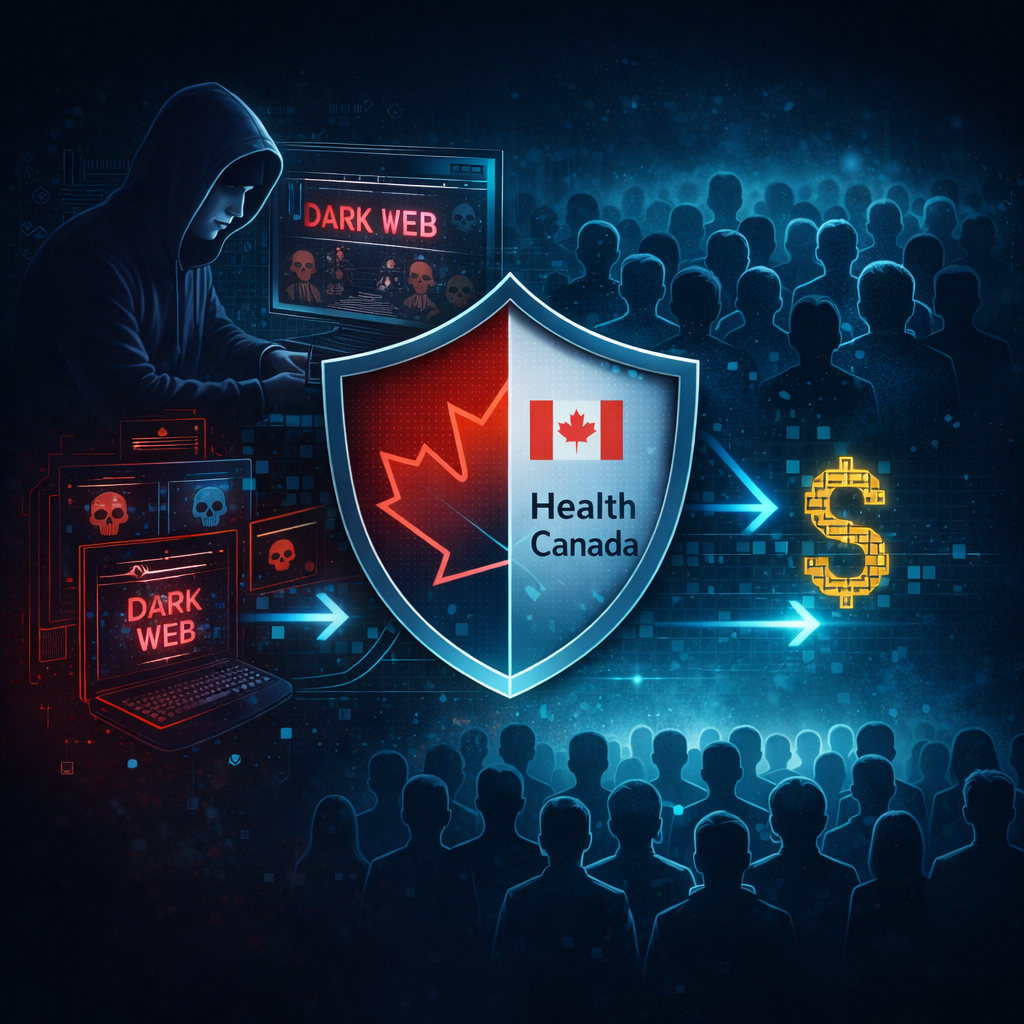
- In late 2019, LifeLabs — one of Canada’s largest providers of lab testing — was subject to a cyberattack. The breach exposed the personal and health data of millions of Canadians.
- According to its investigation report (completed in June 2020, publicly released only in November 2024), hackers accessed data from systems containing names, addresses, dates of birth, health-card numbers, login info, email addresses — and for some, actual lab test results.
- The scale was vast: up to 15 million individuals’ data may have been compromised.
- The privacy regulators in Ontario and British Columbia found LifeLabs “failed to take reasonable steps” to safeguard sensitive personal health information, and collected more data than was necessary — violating obligations under privacy law.
In 2024 LifeLabs completed a class-action settlement — roughly 900,000 valid claims were filed under the settlement process.
Why This Breach Matters Beyond Medical Records – It’s About Trust and Surveillance
At first glance, a health-lab data breach may seem isolated: medical records, lab results, sensitive personal info. But think about what that data represents — and what similar sensitivities are at stake when institutions (public or private) collect data about where you go, who you meet, what routes you take, or what ads you respond to.
- Normalization of mass data collection. If a medical lab handled such deeply personal data without sufficient safeguards, what does that say about the readiness of public-space surveillance initiatives to protect citizens’ privacy?
- Consolidation of personal identity. The LifeLabs breach exposed highly identifying information: health-card numbers, full names, birthdates. Surveillance systems — with video footage, facial recognition, location logs — can similarly aggregate data into full, traceable profiles.
- Erosion of trust. People tend to assume health systems are among the safest data custodians. When that trust is broken, it shakes confidence not just in medical labs — but in any institution that collects or processes data, including public spaces.
- Unseen long-term harms. Beyond identity theft or targeted phishing, breaches like LifeLabs have psychological impacts — anxiety, fear of exposure, loss of control. When surveillance becomes routine, those impacts can intensify.
A Concrete Example: “Ordinary Person + Ordinary Routine = Permanent Data Shadow”
Because the LifeLabs breach affected millions, precise stories of individuals are diminished by scale — the “data-drip” effect turns victims into statistics. Still, consider this hypothetical but realistic scenario:
- A Canadian undergoes lab testing at LifeLabs. Their lab results, health-card number, email, date of birth, and address are stored in the database.
- That data now exists — somewhere — in the hands of criminals (or at risk of resale or misuse). Even if there’s no immediate harm, it becomes part of their permanent digital record.
- Now imagine adding another data point: a public-space camera recognizes their face near a bus stop; a retail sensor detects their presence in a store; their phone’s WiFi pings their location across multiple neighbourhoods.
- Over time, these disparate data sources can be stitched into a comprehensive profile — from health history to movement patterns to behavioural profile.
The LifeLabs breach reminds us that if even healthcare institutions can mishandle data, then all institutions — including those deploying surveillance — could be mishandling far more trivial but equally personal data.
The LifeLabs settlement — like most data-breach settlements in Canada — offers compensation, but it does not offer restoration. Money can address inconvenience, but it cannot put breached data back into the vault. Once personal information escapes into criminal markets, it exists permanently: copied, traded, and stored across systems no one can audit or erase.
LifeLabs isn’t unique. Nearly every major breach settlement in Canada and the U.S. ends the same way — a cheque for affected individuals, a promise to “do better,” and no meaningful way to retrieve or neutralize the stolen data. For the victims, the consequences don’t end with a payout. Their information becomes part of the permanent digital underworld, forcing them to look over their shoulder for years, always wondering when that old breach will resurface as fraud, identity theft, or something worse.
Financial compensation may close a legal case, but it does not close the vulnerability created by breached data. In the digital world, once it’s out, it’s out forever.
What This Should Wake Up Canadians To
- Data-minimalism must become the standard. Institutions should collect only what’s strictly necessary. If a lab doesn’t need a user’s address or past health-history context, it shouldn’t store it. The same principle should apply to surveillance and tracking systems.
- Stronger safeguards and accountability for all data handlers. If even sensitive health data isn’t always protected, we must push for stronger laws, transparent audits, and independent oversight for all agencies that collect personal data — especially in public spaces.
- Consent and transparency, even in public spaces. Canadians deserve to know when, how, and why their data — movement, face, retail behaviour — is being collected, stored or used. Silence becomes complicity.
- Public awareness of long-term risks. It’s not just about financial risk or immediate identity theft. It’s about living under persistent visibility, with a permanent digital shadow.
Conclusion: Surveillance Isn’t Just Cameras — It’s Everything That Generates Data
The 2019 breach at LifeLabs should be a wake-up call. It’s not just a story about stolen lab results — it’s a cautionary tale about how easily institutions we trust can fail at protecting our privacy.
As Canada adopts more surveillance technologies — facial recognition, public-space cameras, data mining — we must ask: if a healthcare lab can’t safeguard medical records, can we trust that our daily movements and behaviours will remain private?
Our anonymity in public spaces — a core value in a free society — depends on robust data governance, respect for consent, and real accountability. The LifeLabs breach shows what’s at stake.
References
- Joint Investigation Into Lifelabs data breach – Information and Privacy Commissioner, Ontario, Canada.
- LifeLabs Privacy Breach December 17, 2019 – Information and Privacy Commissioner, Ontario, Canada.
- LifeLabs hack: What Canadians need to know about the health data breach – GlobalNews
- LifeLabs data breach saw health info of millions of Canadians hacked: report – INsauga, The Canadian Press
- Joint investigation into LifeLabs data breach – Information and Privacy Commissioner of Ontario PHIPA Decision 122 & Information and Privacy Commissioner for British Columbia Investigation Report 20-02
- Commissioners publish 2020 investigation report into LifeLabs privacy breach affecting millions of Canadians – Office of the Information and Privacy Commissioner/Ontario