Northern Overwatch
No Result
View All Result
  • Login
PRICING
  • Editorial
  • News
    • Critical Infrastructure
    • Data Breaches
    • Ransomware & Malware
    • Telecom & ISP Incidents
    • Government & Regulation
    • Updates & Follow-ups
  • Investigations
    • Featured Investigations
    • Surveillance & Power
    • Corporate Accountability
  • Impact on Canadians
    • Breach Consequences
    • What It Means for You
  • Privacy How-To
    • Getting Started
    • Devices & Apps
    • Advanced Privacy
  • Cyber Law & Policy
    • Your Rights as a Canadian
    • Surveillance & Lawful Access
    • Telecom Regulations
  • Recommendations
    • Books & Resources
    • Software & Tools
    • Hardware & Devices
  • Archives
  • Editorial
  • News
    • Critical Infrastructure
    • Data Breaches
    • Ransomware & Malware
    • Telecom & ISP Incidents
    • Government & Regulation
    • Updates & Follow-ups
  • Investigations
    • Featured Investigations
    • Surveillance & Power
    • Corporate Accountability
  • Impact on Canadians
    • Breach Consequences
    • What It Means for You
  • Privacy How-To
    • Getting Started
    • Devices & Apps
    • Advanced Privacy
  • Cyber Law & Policy
    • Your Rights as a Canadian
    • Surveillance & Lawful Access
    • Telecom Regulations
  • Recommendations
    • Books & Resources
    • Software & Tools
    • Hardware & Devices
  • Archives
No Result
View All Result
Northern Overwatch
No Result
View All Result
Home Impact on Canadians

Privacy Is Not a Crime: Why Wanting Digital Privacy Doesn’t Make You a Suspect

admin by admin
February 12, 2026
Reading Time: 3 mins read
0
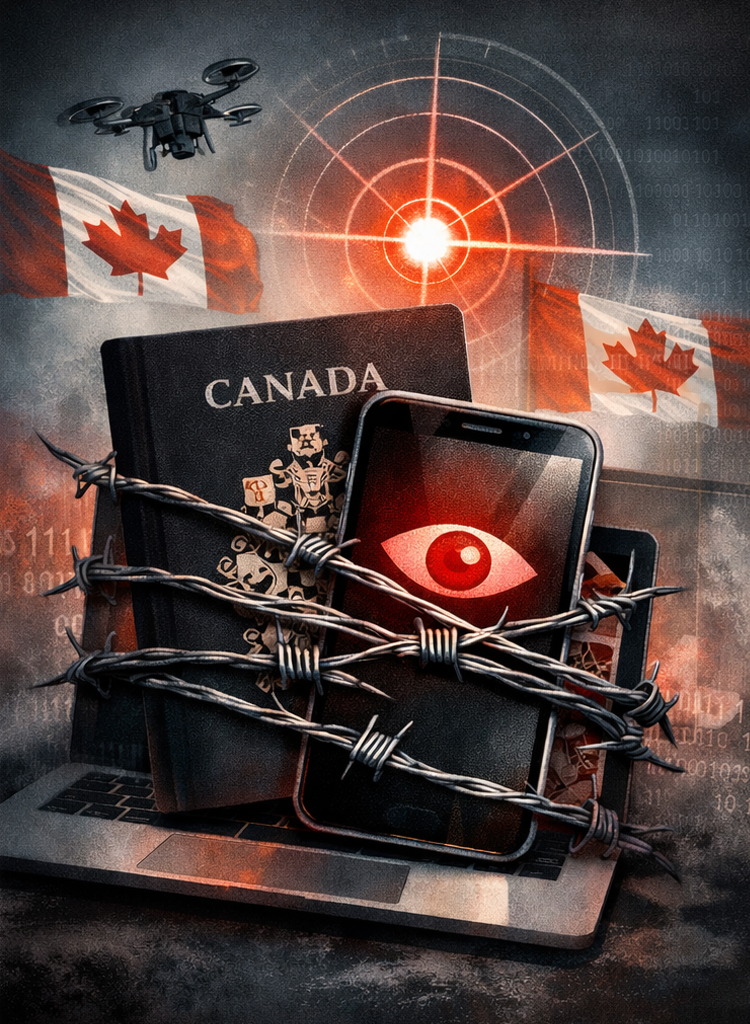
Canadian passport and smartphone wrapped in barbed wire symbolizing loss of privacy and digital rights

When financial, medical, and personal data become leverage, privacy shifts from a personal choice to a structural safeguard.

We live in a time where locking your front door at night is considered responsible, but protecting your digital life can still raise eyebrows. Curtains are normal. Passwords are expected. Yet encryption, privacy‑focused operating systems, or tools that limit tracking are often treated as suspicious. Want privacy online, and the question quickly becomes: what are you hiding?
This framing is not just flawed — it is dangerous. And for Canadians, its consequences are no longer theoretical.

RELATED POSTS

Why U.S. Ownership of Canadian Health Data Should Alarm Every Canadian

When Your Medical Data Leaks, There’s No Recall Button


When Privacy Became a Red Flag

Somewhere along the way, the narrative shifted. Privacy, once understood as a basic condition of personal freedom, began to look like a liability. Authorities and institutions increasingly repeat a simple idea: if you have nothing to hide, you have nothing to fear. By that logic, we should all live in glass houses, share our finances with strangers, and unlock our phones on demand.
Offline, this argument would be absurd. No one questions why you close your bedroom door or decline to discuss your bank balance. Online, however, the same expectations of privacy are often treated as suspicious behaviour. The inconsistency would be comical if the implications were not so serious.


Why Privacy Tools Attract Suspicion

Tools like encryption, VPNs, Tor, or privacy‑focused operating systems are frequently portrayed as instruments for criminals. The reality is far less dramatic. These tools exist to protect ordinary people in a digital environment where data collection is constant and breaches are routine.
Journalists use them to protect sources. Activists use them to avoid harassment or retaliation. Survivors of abuse rely on them to stay safe. Businesses depend on encryption to function at all. And many Canadians simply want to limit tracking, reduce exposure to data brokers, or protect themselves on insecure networks.
Yes, bad actors use privacy tools — just as they use cars, smartphones, and cash. We do not criminalize everyday tools because a small minority misuse them. We address crimes by pursuing criminals, not by treating privacy itself as suspect.

The Double Standard Canadians Are Expected to Accept

Large corporations rely heavily on privacy and security tools. Remote work depends on VPNs. Financial systems rely on encryption. Cloud infrastructure would collapse without it. Yet when individuals use the same protections, the reaction changes.
In practice, Canadians are increasingly asked to accept constant tracking while being discouraged — implicitly or explicitly — from shielding themselves. Websites block VPN users. Services deny access based on location or privacy settings. The message is subtle but clear: participation in modern life is conditional on visibility.

Privacy Is About Control, Not Secrecy

Privacy is often mischaracterized as secrecy, but the two are not the same. Privacy is about control — deciding what information is shared, with whom, and under what circumstances. It allows people to explore ideas, seek help, communicate, and dissent without fear of being permanently recorded or misinterpreted.
When privacy erodes, behaviour changes. People self‑censor. They avoid topics, associations, or tools that might draw attention. Over time, this chilling effect reshapes public life in ways that are difficult to reverse.
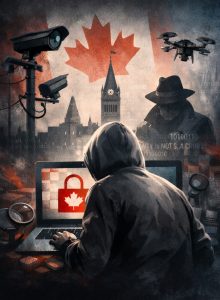
Hooded individual using a laptop under surveillance cameras and drones with Canadian Parliament in the background
As digital surveillance expands, Canadians who seek privacy tools are increasingly viewed with suspicion rather than prudence.

When Data Access Becomes Power

Recent Canadian history offers a clear example of why privacy matters beyond the abstract. During the Truck Convoy protests, the federal government froze the bank accounts of individuals without criminal charges or traditional judicial process. Regardless of political views, the precedent was unmistakable: access to essential systems can be revoked quickly when conditions allow it.
This matters because data is the gateway to enforcement. Financial records, health information, communications metadata, and location data all create leverage. When such data is widely collected, poorly protected, or easily shared, the threshold for extraordinary measures drops. What is framed as exceptional today becomes normalized tomorrow.

The Long‑Term Cost of Normalized Surveillance

The erosion of privacy is not a single event — it is cumulative. Each data collection program, each normalization of tracking, each justification that privacy is expendable in the name of safety shifts the balance further away from the individual.
For Canadians, this means living with permanent digital records that cannot be recalled, corrected, or contextualized. It means accepting that data collected for one purpose may later be used for another. And it means relying on institutional restraint rather than structural protection.
Privacy Is a Democratic Safeguard
Privacy is not a luxury, a loophole, or a sign of guilt. It is a foundational safeguard in a democratic society. It allows people to participate freely, to challenge authority, and to live without constant scrutiny.
Wanting privacy does not make someone suspicious. It makes them aware. In a world where data is currency and surveillance is cheap, protecting one’s digital life is not an act of defiance — it is an act of responsibility.
Privacy is not a crime. It is a right worth defending — deliberately, openly, and without apology.

Tags: Cyber EthicsData ProtectionDigital RightsGovernment SurveillancePrivacy
ShareTweetPin
Previous Post

Sky Global – The Company That Defied Surveillance And Built Building a Private Network

Next Post

Securing Your Laptop or PC: The First Privacy Settings Everyone Should Enable

admin

admin

Related Posts

LifeLabs sign outside a medical laboratory location in Canada, representing the LifeLabs data breach and patient privacy concerns
Impact on Canadians

Why U.S. Ownership of Canadian Health Data Should Alarm Every Canadian

January 25, 2026
LifeLabs sign outside a medical laboratory location in Canada, representing the LifeLabs data breach and patient privacy concerns
Breach Consequences

When Your Medical Data Leaks, There’s No Recall Button

January 25, 2026
Next Post
Infographic showing a laptop protected by a shield, surrounded by icons representing updates, encryption, firewall, account security, and app management.

Securing Your Laptop or PC: The First Privacy Settings Everyone Should Enable

Please login to join discussion

Recommended Stories

Infographic showing a laptop protected by a shield, surrounded by icons representing updates, encryption, firewall, account security, and app management.

Securing Your Laptop or PC: The First Privacy Settings Everyone Should Enable

February 12, 2026
Canadian passport and smartphone wrapped in barbed wire symbolizing loss of privacy and digital rights

Privacy Is Not a Crime: Why Wanting Digital Privacy Doesn’t Make You a Suspect

February 12, 2026
Northern Overwatch - Archives

Downloads

January 26, 2026

Popular Stories

  • North Perth Hit by WorldLe@ks Data-Theft Operation

    North Perth Hit by WorldLe@ks Data-Theft Operation

    0 shares
    Share 0 Tweet 0
  • What Canadian ISPs Log – and For How Long

    0 shares
    Share 0 Tweet 0
  • Why Northern Overwatch Exists

    0 shares
    Share 0 Tweet 0
  • SkyGlobal – An investigation into power, privacy and surveillance

    0 shares
    Share 0 Tweet 0
  • When Your Medical Data Leaks, There’s No Recall Button

    0 shares
    Share 0 Tweet 0
Northern Overwatch Logo

Northern Overwatch is a Canadian investigative publication examining cybersecurity, privacy, surveillance, and digital power. We explain complex cyber incidents, laws, and technologies in plain English, exposing how they affect real people — and defending the right to privacy in an increasingly monitored world.

Recent Posts

  • Securing Your Laptop or PC: The First Privacy Settings Everyone Should Enable
  • Privacy Is Not a Crime: Why Wanting Digital Privacy Doesn’t Make You a Suspect
  • Sky Global – The Company That Defied Surveillance And Built Building a Private Network

ARTICLES

  • Archives
  • Cyber Law & Policy
    • Telecom Regulations
    • Your Rights as a Canadian
  • Editorial
  • Impact on Canadians
    • Breach Consequences
    • What It Means for You
  • Investigations
    • Featured Investigations
    • Surveillance & Power
  • Latest News
    • Data Breaches
  • Privacy How-To
    • Getting Started
  • Recommendations
    • Software & Tools

USEFUL LINKS

About Us

© 2025 Northern Overwatch - From the North — for those who still value privacy. A CanHack publication.

Welcome Back!

Login to your account below

Forgotten Password?

Retrieve your password

Please enter your username or email address to reset your password.

Log In
No Result
View All Result
  • Editorial
  • News
    • Critical Infrastructure
    • Data Breaches
    • Ransomware & Malware
    • Telecom & ISP Incidents
    • Government & Regulation
    • Updates & Follow-ups
  • Investigations
    • Featured Investigations
    • Surveillance & Power
    • Corporate Accountability
  • Impact on Canadians
    • Breach Consequences
    • What It Means for You
  • Privacy How-To
    • Getting Started
    • Devices & Apps
    • Advanced Privacy
  • Cyber Law & Policy
    • Your Rights as a Canadian
    • Surveillance & Lawful Access
    • Telecom Regulations
  • Recommendations
    • Books & Resources
    • Hardware & Devices
    • Software & Tools
  • Archives

© 2025 Northern Overwatch - From the North — for those who still value privacy. A CanHack publication.

Are you sure want to unlock this post?
Unlock left : 0
Are you sure want to cancel subscription?